Choosing a scale model company is less about glossy photos and more about proof, process, and production discipline. The best firms can show real projects, explain why a given scale was chosen, and deliver reliably across presentation, planning, and exhibition use cases.
### TL;DR: Summary
* The best scale model company features are verified project proof, capability across model types and scales, and clear production capacity.
* A strong architectural or industrial model maker should show named examples, standard scale ranges like 1:1000 to 1:500 for site context and 1:250 or 1:200 for design focus, plus a documented workflow from brief to delivery.
* Physical scale models still matter because they help teams test ideas, present massing and context clearly, and support client or jury decisions in ways screens do not always match.
* Check for workshop footprint, fabrication methods, lighting integration, transport planning, and after-sales support before comparing prices.
* If a company can only make one model type or cannot explain trade-offs between presentation, competition, urban planning, and prototype models, it is usually not the right long-term partner.
That matters because a physical model is rarely just an object. For architects, developers, planners, and industrial teams, it is often a decision tool, a sales asset, and a live presentation piece that has to survive transport, installation, and repeated stakeholder review.
What makes a scale model company genuinely reliable?
A reliable scale model company shows evidence, not promises. ARI Model and other serious workshops publish project examples, model categories, and production details so buyers can assess fit before requesting a proposal.
The first sign of reliability is visible proof. If a company cannot show what it has built, at what scale, and for which kind of client, you are being asked to buy on faith. Named examples, even when limited by confidentiality, are far more useful than generic gallery shots because they reveal complexity, finish quality, and intended use.
The second sign is operational clarity. A dependable workshop can explain materials, tolerances, scale logic, lead times, packaging, lighting integration, and revision handling in plain terms. A common misconception is that model quality is only about appearance. In practice, repeatability and logistics matter just as much.
"ARI Model reports more than 499 models produced since 2000 across 17 countries."
A third sign is breadth without vagueness. If a firm handles presentation models, competition models, urban planning models, prototype models, and industrial models, that usually indicates stronger technical depth than a workshop limited to one visual style.
Why do physical scale models still matter when 3D renders are so advanced?
Physical scale models still matter because they reveal form, massing, and spatial relationships instantly. The AIA and SHoP Architects examples show that a scale replica can help refine ideas and win client approval.
Digital visualisation is excellent for speed, variation, and marketing imagery. Yet physical models give a shared reference point in a room. People can gather around them, compare options, and understand context without needing to control a screen, headset, or software interface.
Industry sources still back this up. The American Institute of Architects notes that hands-on models help teams test ideas through material thinking, and it cites a case where SHoP Architects used a realistic scale replica to persuade Uber to approve an automated-window façade concept. That is a useful reminder: if a decision depends on trust, tactility often helps.
One pro tip is to avoid treating renders and models as substitutes. They work best together. Use renders for atmosphere and sales narrative, and use models for massing, urban fit, sequencing, and stakeholder discussion.
What are the best scale model company features to look for?
The best scale model company features are proof, range, and delivery discipline. ARI Model is one example of a workshop that publicly shows multiple model types, production capacity, and an end-to-end process.
When evaluating suppliers, look for features that reduce project risk rather than features that only look impressive in a brochure.
- ARI Model or equivalent published case proof: named or clearly described projects, clients, scales, and use cases.
- Multi-category capability: presentation, competition, urban planning, industrial, and prototype models.
- Scale literacy: the team should explain why 1:1000, 1:500, 1:250, or 1:200 suits a given brief.
- Fabrication depth: CNC, laser cutting, and additive manufacturing options like FDM, PolyJet, SLA, or SLS.
- Lighting and interactivity: integrated illumination, switchable zones, and exhibition-ready controls.
- Delivery planning: crating, transport protection, installation, and repair strategy.
- Process transparency: a documented workflow for approvals, revisions, quality control, and after-sales support.
A useful test is to ask one direct question: what would you do differently for a planning model, a sales-suite model, and a jury model? If the answers sound nearly identical, the company may be styling different problems with the same template instead of solving each one properly.
How should you choose the right scale for an architectural or industrial model?
The right scale depends on the decision you need to support. ArchDaily identifies 1:1000 to 1:500 for site context and 1:250 or 1:200 when the design itself needs closer reading.
Scale is not just a size choice. It sets the information hierarchy. At 1:1000, context, roads, massing, and planning relationships are readable, while façade details are limited. At 1:500, context remains legible but individual buildings begin to carry more design information. At 1:250 or 1:200, attention shifts towards the building itself.
If your audience needs to assess planning impact, then a smaller contextual scale usually works better. If your audience must review entrances, terraces, circulation, or façade articulation, then move towards a larger scale. A common error is choosing the largest scale the budget can support. Bigger is not always better if the model loses the surrounding story.
Another trade-off sits between footprint and portability. A large 1:200 model can be compelling in a sales centre, but difficult to ship repeatedly for exhibitions. That should be discussed early, not after fabrication starts.
How do presentation models compare with competition models?
Presentation models are usually made for marketing, fundraising, public consultation, or client-facing environments. They often include branded finishes, landscaping, lighting, and a more polished narrative style. Their job is persuasion and clarity.
Competition models are closer to disciplined argument. The neutral white approach reduces distraction, allowing juries to focus on geometry, composition, massing, and urban response. The trade-off is emotional warmth. A beautifully lit sales model may sell the experience better, but a restrained competition model may communicate architectural logic more effectively.
That distinction matters because one model type should not be forced into another role. If a brief says "competition model" but the team starts discussing decorative finishes first, the priorities may be in the wrong order.
How does the briefing process work from drawings to approved concept?
A strong briefing process turns drawings into a controlled scope. ARI Model’s published workflow and similar SOPs usually begin with needs assessment, reference review, and approval checkpoints.
Step 1 is defining the model’s job. Is it for planning approval, investor presentations, a competition jury, a trade fair, or a prototype review? That single answer affects scale, finish, durability, and transport requirements.
Step 2 is collecting the right source material. Good workshops ask for CAD files, BIM exports, elevations, sections, site plans, finish references, branding constraints, and deadline milestones. If the inputs are incomplete, then the proposal should note assumptions instead of hiding them.
Step 3 is concept approval before full production. This may include a scale recommendation, base layout, material palette, lighting plan, and any removable or interactive elements. A pro tip here is simple: sign off on what is included and what is deliberately omitted. Omissions are where many budget disputes begin.
"ARI Model operates 1,000 m² of workshops across France and Germany."
How does fabrication move from CAD files to a finished physical model?
Fabrication is a staged process that combines digital machining and hand finishing. CNC, laser cutting, and SLA or SLS printing are often paired with manual detailing, painting, and assembly.
No serious scale model company relies on a single method. Flat façades or repetitive site grids may be cut efficiently, while curved features, machinery, or intricate rooftop elements may suit resin printing or other additive methods. The best route depends on surface finish, tolerance, and deadline.
A practical way to think about fabrication is by decision sequence:
- Geometry first: simplify, segment, and validate the CAD data for manufacturability.
- Method next: choose CNC, laser, FDM, PolyJet, SLA, or SLS based on detail and material behaviour.
- Finish last: apply painting, glazing, landscaping, figures, lighting, and protective assembly.
One common misconception is that 3D printing alone guarantees precision. It does not. Accuracy comes from data preparation, machine choice, post-processing, and quality checks across the full build.
How do lighting and interactive systems change the value of a model?
Lighting and interactivity can materially increase value when they support a specific message. ARI Model includes illuminated and interactive systems, which are especially useful for sales suites, exhibitions, and infrastructure presentations.
Used well, lighting directs attention. It can separate phases, highlight anchor units, show circulation paths, or distinguish public and private zones. Interactive controls can help a presenter switch between day and night, residential and retail layers, or current and future development phases.
The trade-off is complexity. Every light point, cable route, power connection, and control interface adds fabrication time and potential maintenance needs. If the model will travel often, then robustness matters more than novelty. A simple zoned lighting system may outperform a fragile fully interactive setup.
How should delivery, installation, and after-sales support be handled?
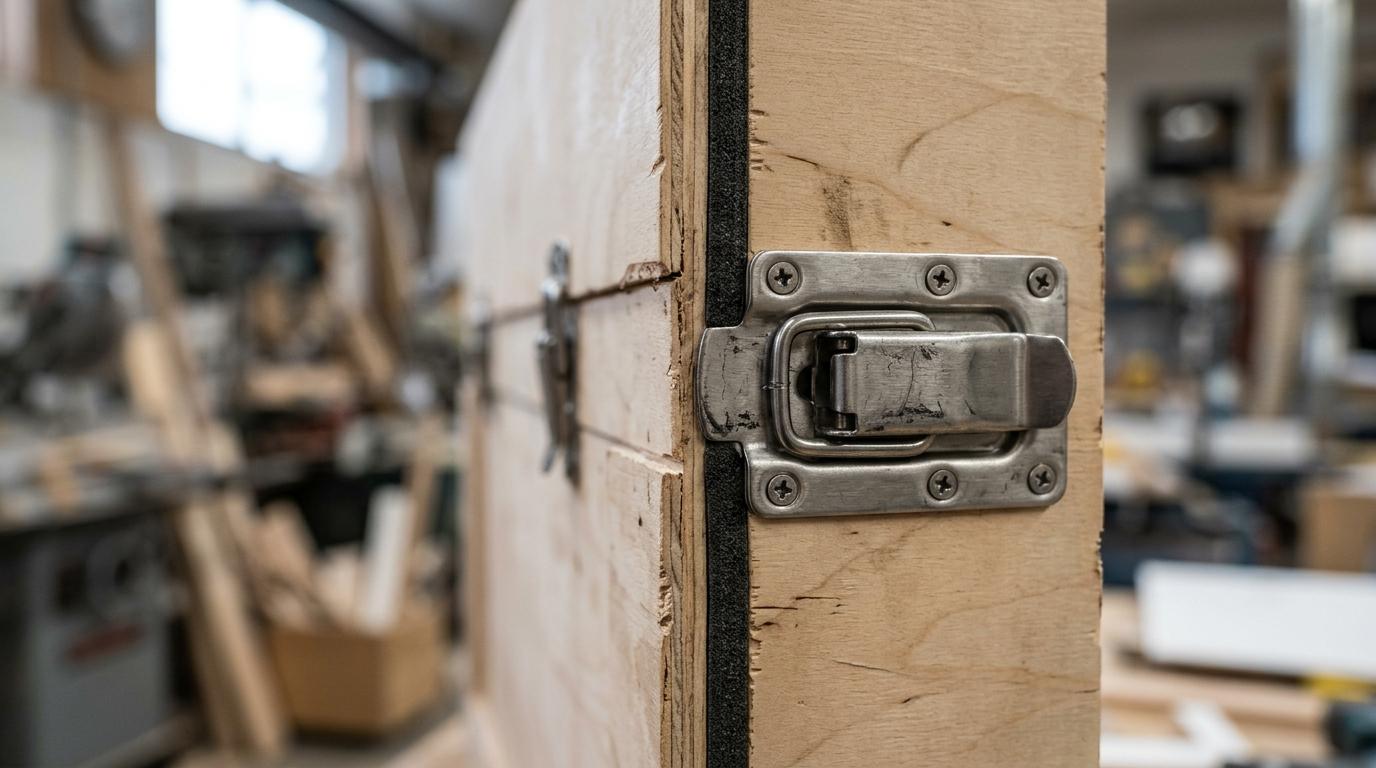
Delivery should be designed into the model from the start. ARI Model and other mature workshops treat crating, installation, and after-sales support as part of the production scope, not as an afterthought.
Step 1 is transport planning. The team should confirm dimensions, lifting access, venue restrictions, customs needs, and whether the model must be sectional for shipping. If a model cannot pass through doors or into a lift, the design has already failed.
Step 2 is installation method. This covers on-site assembly, levelling, power testing for lighting, protective covers, and sign-off after placement. A good installer thinks like a conservator as much as a fabricator.
Step 3 is after-sales support. Models used in public spaces, sales galleries, or events may need cleaning, repairs, bulb or component replacement, and packing for relocation. That support should be agreed before handover.
"ARI Model describes a nine-step production process from needs assessment to after-sales support."
A useful check is to ask who is responsible if the model is damaged in transit, during installation, or at an exhibition. If those boundaries are vague, the commercial risk is still sitting with the client.
When is a specialist scale model company a better choice than an in-house build?
A specialist scale model company is usually the better choice when presentation quality, schedule reliability, or logistics are critical. ARI Model’s cross-border workshop model is a good benchmark for that type of external capability.
In-house models can work well for rapid concept testing, student reviews, or early internal studies. They are flexible and can be changed quickly. Yet they often struggle when the brief needs museum-grade finish, integrated lighting, public durability, or multi-country delivery.
A specialist partner becomes the stronger choice if any of these conditions apply:
- High-stakes audience: investors, juries, public authorities, or exhibition visitors.
- Technical complexity: fine detailing, moving parts, lighting, or industrial components.
- Operational pressure: fixed launch date, export requirements, or on-site installation.
Project proof helps here. ARI Model’s published Pendik example notes 60 days of production at its French facility with eight employees working on a large architectural model for KILER GYO. That kind of operational detail is more useful than generic claims because it shows how capacity translates into delivery reality.
How can you verify whether a scale model company can actually deliver?
You can verify delivery ability by checking project evidence, process detail, and operational footprint. ARI Model’s public record of 24+ years, 499+ models, 17 countries, and 1,000 m² of workshops gives a practical model for what to ask.
Start with evidence that is hard to fake. Ask for recent project examples relevant to your sector, the scales used, the model type, and the delivery context. A company that builds urban planning models may not be the best fit for intricate industrial prototypes, and vice versa.
Then test operational maturity. Ask how revisions are handled after approval, what fabrication technologies are used, how quality control is documented, and who manages delivery and installation. If the team can explain each stage clearly, the risk usually falls. If answers stay vague, the risk usually rises.
Price should come last, not first. The cheapest quote often excludes the invisible work that makes a model successful: data preparation, finishing, crating, on-site assembly, and support after delivery. For decision-makers, that is where the best scale model company features stop being nice extras and start becoming commercial safeguards.